
You're prepping a client pitch and you've seen the AI-generated mood boards on X. They look fast, but they also look... generic. As of June 2026, this trend is everywhere, but it's creating a sea of sameness. The raw output from a standard image generator is a creative liability in a high-stakes meeting. It shows you can operate a tool, but it doesn't show you understand the client.
Here’s how to make one that actually looks like their brand, proves you did your homework, and helps you win the business.
Why your AI mood board isn't impressing clients
The core problem with most AI mood boards is that they lack a point of view — or rather, they have the AI's point of view instead of the client's. You type in “mood board for a tech company focused on nature and trust,” and you get a predictable collage of glowing circuits on leaves and serene people looking at screens. It's visually chaotic and, worse, completely detached from the client's actual brand identity.
This is the same frustration driving creators on platforms like Midjourney to seek out features like '--style raw' — a clear signal of demand for less 'opinionated' AI and more user control. A generic AI aesthetic screams that you spent five minutes on a prompt, not that you spent time thinking about their brand. In a pitch, that's deadly. The goal isn't just to generate images; it's to generate a specific, coherent creative direction that speaks the client's language.
The 3-step workflow for a pitch-winning mood board
Instead of battling a generic generator, a workflow-based approach turns the mood board into a strategic sales tool. It's designed to do one thing: show a prospective client a vision of their future, rendered in a visual language they already speak. The entire process takes minutes, but the result looks like hours of thoughtful creative direction.
Here’s the breakdown:
- Instantly capture the client's visual DNA: Create a Brandkit from their website URL in seconds.
- Generate multiple creative directions: Use the Brandkit to explore distinct, on-brand concepts.
- Transition from concept to campaign: Turn the approved mood board into ready-to-use assets.
Step 1: Instantly capture the client's visual DNA
This is the move that changes the game. Before you write a single prompt, you give the AI its most important instruction: the client's brand identity. With MyUP, you do this by creating a temporary Brandkit simply by inputting the client's website URL.
The system automatically extracts their logo, color palette, fonts, and overall stylistic feel. This isn't just a color picker; it's an analysis of their entire visual system. This Brandkit becomes the non-negotiable foundation for every image the AI generates. From this point forward, the AI is no longer a random idea generator; it's an extension of the client's own brand team, working under your direction.
Step 2: Generate multiple creative directions (not just images)
With the client's Brandkit active, you can now explore actual concepts. The power of this step is showing the client not just one idea, but the *range* of possibilities within their own brand guidelines. This proves your creative flexibility and immediately elevates the conversation from “do we like this?” to “which of these strong directions is right for our goal?”
For example, you could present three distinct boards for a luxury skincare brand:
- An elegant, nature-inspired direction: Use a workflow designed for sophisticated product visuals. The AI will use the client's Brandkit to interpret 'luxury' and 'floral' in a way that feels authentic to them, not generic. Workflow code: #myup-5q78-bln0
- A bold, editorial direction: Shift the concept to feel like a high-fashion magazine shoot. This shows how the brand could appear in a different context, proving its versatility. Workflow code: #myup-yk1h-uqy8
- A clean, minimalist direction: Strip it all back to focus purely on product and form. This demonstrates an understanding of modern, direct-to-consumer aesthetics. Workflow code: #myup-fy77-jljs
In minutes, you've produced three client-facing concept boards that are all visually consistent and 100% on-brand. The MyUP workflow executes the production; you validate the results and guide the creative strategy.
Step 3: From approved concept to campaign assets
The workflow doesn't end when you win the pitch. The moment the client points to a mood board and says, “That one. Let’s do that,” you’re ready for production. Because you started with a Brandkit, the bridge from concept to campaign is seamless.
The approved creative direction is already encoded in your workflow. You can now use that same Brandkit and stylistic guidance to generate the actual campaign deliverables. Need a set of social ads? A hero image for the website? An animated poster? The visual consistency is already built-in.
For instance, if the client approved the minimalist direction, you could immediately generate a vertical ad for social media that perfectly matches the mood board's aesthetic. You simply run a new workflow, and the AI produces an asset that's ready for your final approval. This is how you move from pitch to production without losing momentum or brand integrity.
Workflow code: #myup-fts6-4ihp
Vertical Gourmet French Fry Ad
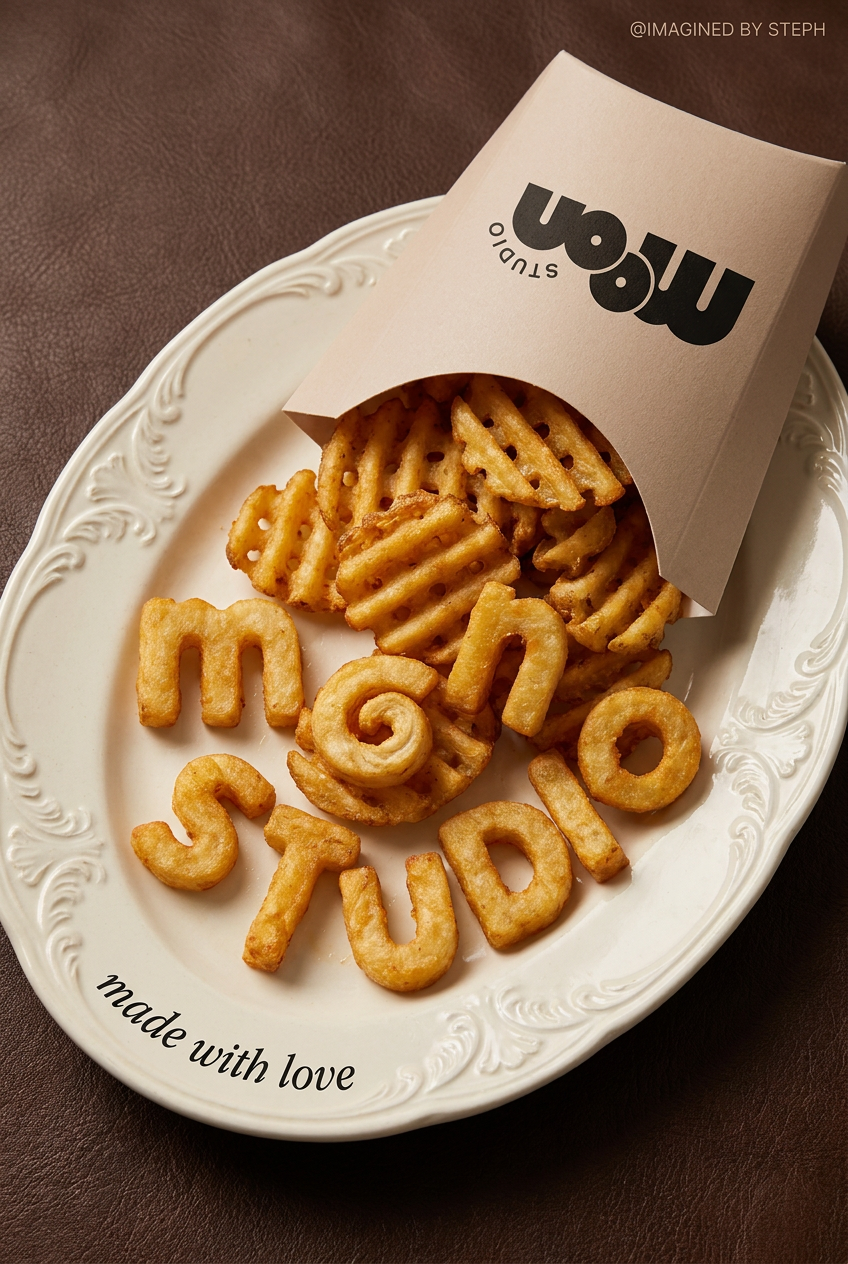
Transform your products into high-fashion editorial ads. This setup uses a dynamic diagonal layout and a slightly tilted overhead angle to give food and packaging incredible depth and texture. It's perfect for giving any brand a chic, premium look.
Regenerate using your own assets.
The final check: Does your mood board make a sale?
An AI mood board for a client pitch isn't a creative exercise; it's a sales document. Its job is to close the gap between your agency and their business, proving you understand their world so deeply that you can already create for it. By starting with the client's own brand DNA, you shift the conversation from your credentials to their future. You're not just showing them pretty pictures. You're showing them a finished product, giving them the confidence to say yes.