You’ve seen the viral social media threads: a designer proudly displays their new event poster, then shares the “process.” Step one: generate a dozen concepts in Midjourney. Step two: painstakingly upscale the best one. Step three: import it into Canva or Figma to manually add the event title, date, logo, and speaker names. The final result might look good, but the workflow is a clunky, time-consuming workaround. It’s a clear signal of a gap in creative tooling.
This hybrid process is the default for many, but it completely breaks down at scale. The real job isn’t to create one poster; it’s to launch an entire promotional campaign. That single poster needs to become a LinkedIn banner, an Instagram story, a square social post, and a 16:9 speaker announcement. Recreating the design manually for each format is where brand consistency dies and your afternoon disappears. The recent buzz around “one-prompt campaign generators” shows the demand for a better way, but they often trade brand control for speed, leaving you with generic assets that don’t feel like yours. There is a professional alternative.
The event poster is done. Now for the other 10 assets.
The core problem with the multi-app shuffle isn't just the wasted time switching between tools. It’s the inconsistency it introduces. The font size is slightly different on the story version. The logo placement is a few pixels off on the banner. The color hex code is correct, but the rendering looks different. These small deviations accumulate, slowly eroding the visual cohesion of your campaign.
Promoting an event, whether it's a webinar, a conference, or a product launch, is a game of repetition and recognition. Your audience needs to see the same core visual identity across multiple touchpoints to build recall. When every asset is a manual adaptation of the last, you’re not building a campaign; you’re just making a series of one-offs. This approach doesn't scale. If a speaker drops out or a date changes, you have to go back and edit every single asset by hand. It’s inefficient and unsustainable for any serious marketing effort.
Why one-off generation is a campaign killer
Relying on single-image generators for campaign assets creates three major bottlenecks:
- It’s slow: The time spent exporting, importing, resizing, and re-applying text and logos across a dozen assets for a single event is immense. This is time that could be spent on strategy and promotion.
- Brand consistency is a fantasy: Without a centralized system enforcing your brand rules, maintaining visual consistency is nearly impossible. You’re relying on memory and manual precision, which inevitably fail.
- It prevents iteration: Want to test a different visual style for your campaign? With a manual workflow, that means starting the entire painful process from scratch. You’re locked into your initial creative direction because the cost of changing it is too high.
The alternative is to stop thinking about creating assets and start thinking about building a campaign generation system. Instead of making shots, you build the machine that makes the shots for you, perfectly, every time.
The campaign workflow: build a system, not just shots
On MyUP.ai, you don’t just create a poster. You define an event campaign workflow that can generate all the assets you need from a single source of truth. This approach is built on three core components that work together:
- A Central Brief: You provide the key event details—name, date, speakers, topic, visual style—as simple text inputs. This is your single source of truth.
- A Brandkit: You set up your brand once by saving your logo, color palette, and custom fonts. MyUP uses this Brandkit as a 'brand guardian' to ensure every asset is perfectly on-brand.
- A Multi-Output Workflow: You use a template that is pre-configured to generate multiple formats (e.g., poster, story, banner) from your central brief and Brandkit.
When you change the date in the brief, it updates across all assets automatically. When you run the workflow, it applies your brand fonts and colors to every single output without you lifting a finger. This is the difference between manual labor and an automated system.
Step 1: Structure your event details into a master brief
The first step is to organize your event information into a clear, structured brief that the AI can understand. Instead of writing a long paragraph, break it down into key-value pairs. This ensures the AI knows exactly what information to place where on each visual.
Here is a sample brief you can adapt for your own event. Simply copy this structure and fill in your details when using a MyUP workflow.
{ "event_name": "AI in Creative Ops Summit", "tagline": "Automate, Create, Accelerate", "date": "October 28-29, 2026", "venue": "Virtual Event | Global Access", "speakers": [ {"name": "Jia Li", "title": "Head of AI, Acme Corp"}, {"name": "Ben Carter", "title": "Author, 'The Automation Age'"} ], "website": "creativeops-summit.com", "visual_style": "Bold typography, vibrant gradients, minimalist layout, abstract geometric shapes" }This structured input is the engine of your campaign. Get this right, and the rest of the process becomes a matter of execution, not endless manual adjustments.
Step 2: Generate the core visual for your campaign
With your brief ready, you can now generate the centerpiece of your campaign: the main event poster. This is where you address the core task of an AI event poster generator, but within a system that’s built for more. In MyUP, you select a workflow that matches your desired aesthetic and input your brief.
The AI will generate a poster concept based on your `visual_style` description, populating it with the event details from your brief. You’re not just getting a pretty picture; you’re getting a functional, informative marketing asset. You approve the direction, and MyUP handles the production. For a classic, textured look that grabs attention, the Vintage Risograph Event Poster workflow is a great place to start.
Workflow code: #myup-3xus-3l9x
Vintage Risograph Event Poster
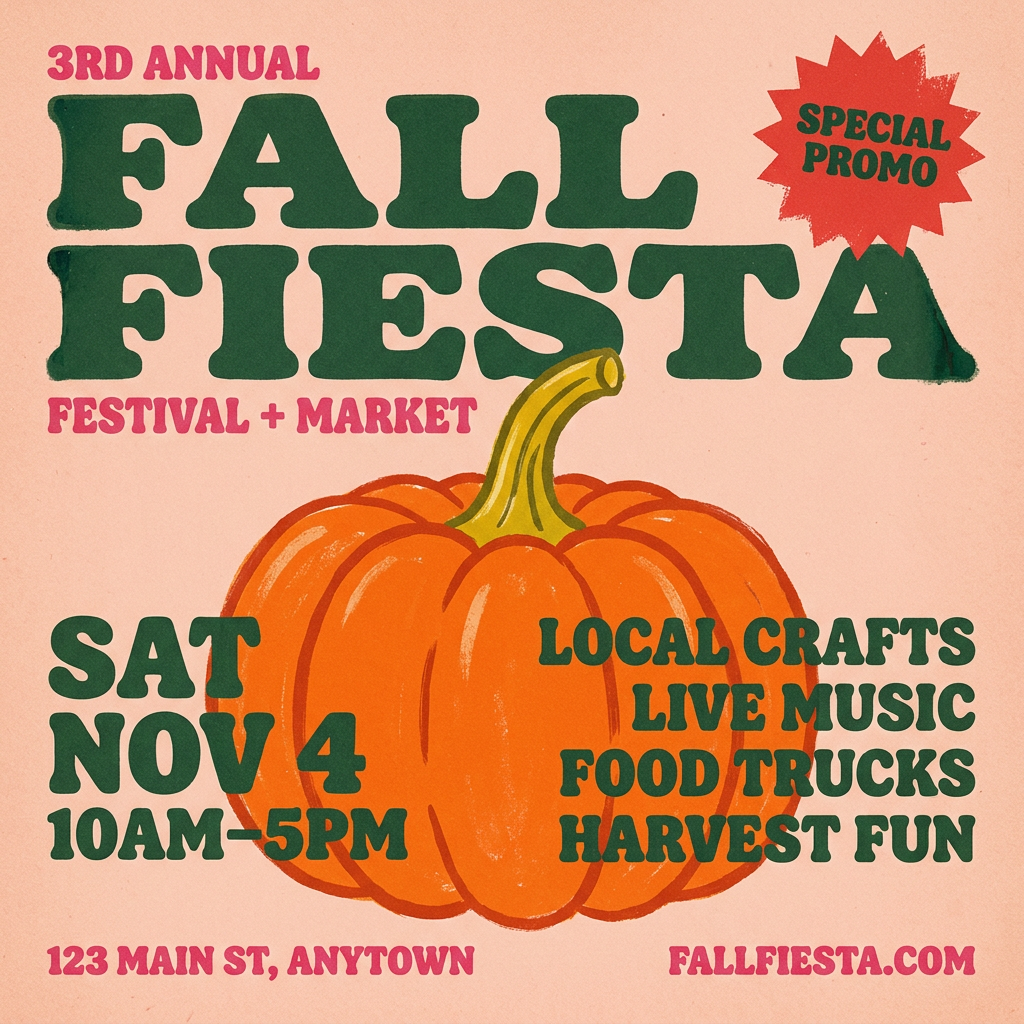
Turn any announcement into a gritty, tactile gig poster. It layers your text with an uneven letterpress ink texture over a dusty, warm pink risograph paper background. It’s perfect for giving social posts a real analog, screenprinted vibe.
Regenerate using your own assets.
Step 3: Automate the variations for every channel
This is where the magic happens. Once you've approved the core visual, the MyUP workflow doesn't stop. It automatically generates the entire suite of assets you need for your campaign. The same system that created your poster will now produce:
- A 16:9 version for event platform banners and speaker announcements.
- A 9:16 version for Instagram Stories and TikTok countdowns.
- A 1:1 square version for Instagram and Facebook feed posts.
- A 4:1 version for LinkedIn event headers.
Each asset is not just a lazy crop of the original. The workflow intelligently recomposes the elements to fit each format natively, ensuring readability and visual impact. This is the core of an effective AI visual repurposing workflow. To see how this works with a different aesthetic, try running your brief through a more corporate or professional template, like the one below for a hiring event.
Workflow code: #myup-eiob-7tbc
Modern Hiring Poster
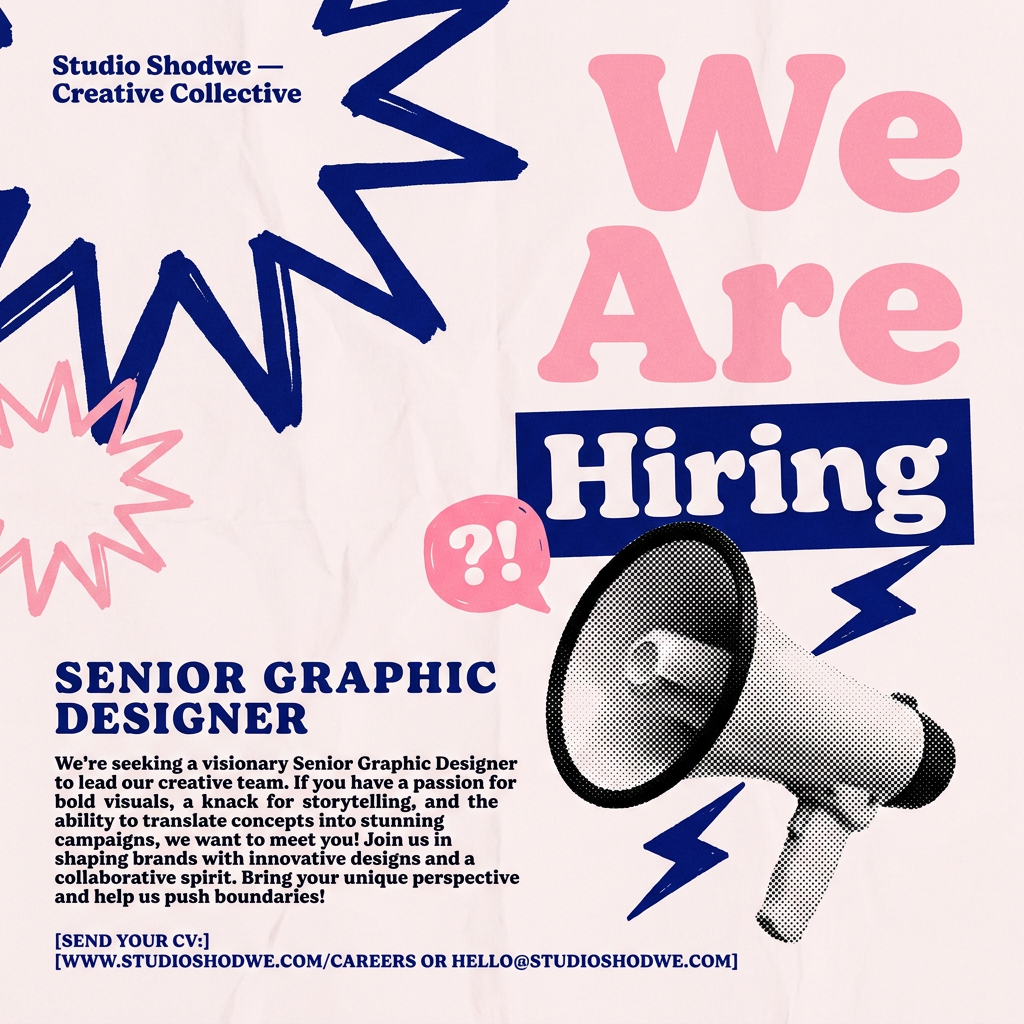
Turn your open roles into stylish social announcements. It sets your hiring details against a soft, textured paper background with clean, editorial typography. Perfect for giving your brand a polished, modern look when you're looking to hire.
Regenerate using your own assets.
Step 4: Let your Brandkit enforce consistency automatically
The final, critical piece is ensuring every single asset is perfectly on-brand. This is where the MyUP Brandkit comes in. Because you've already saved your brand's DNA—your exact logo, your specific color palette (e.g., #FF4B4B, #1A202C), and your licensed fonts—the workflow applies them to every generated visual automatically.
There's no manual color picking or font selection. There's no risk of using the wrong logo file. The Brandkit acts as an automated brand compliance officer, ensuring that from the main poster to the last-minute story graphic, every piece of content is instantly recognizable as yours. This system works across any visual style, from clean and modern to something more experimental and edgy, like a retro zine aesthetic.
Workflow code: #myup-msop-hlxf
Retro Zine Style Event Poster
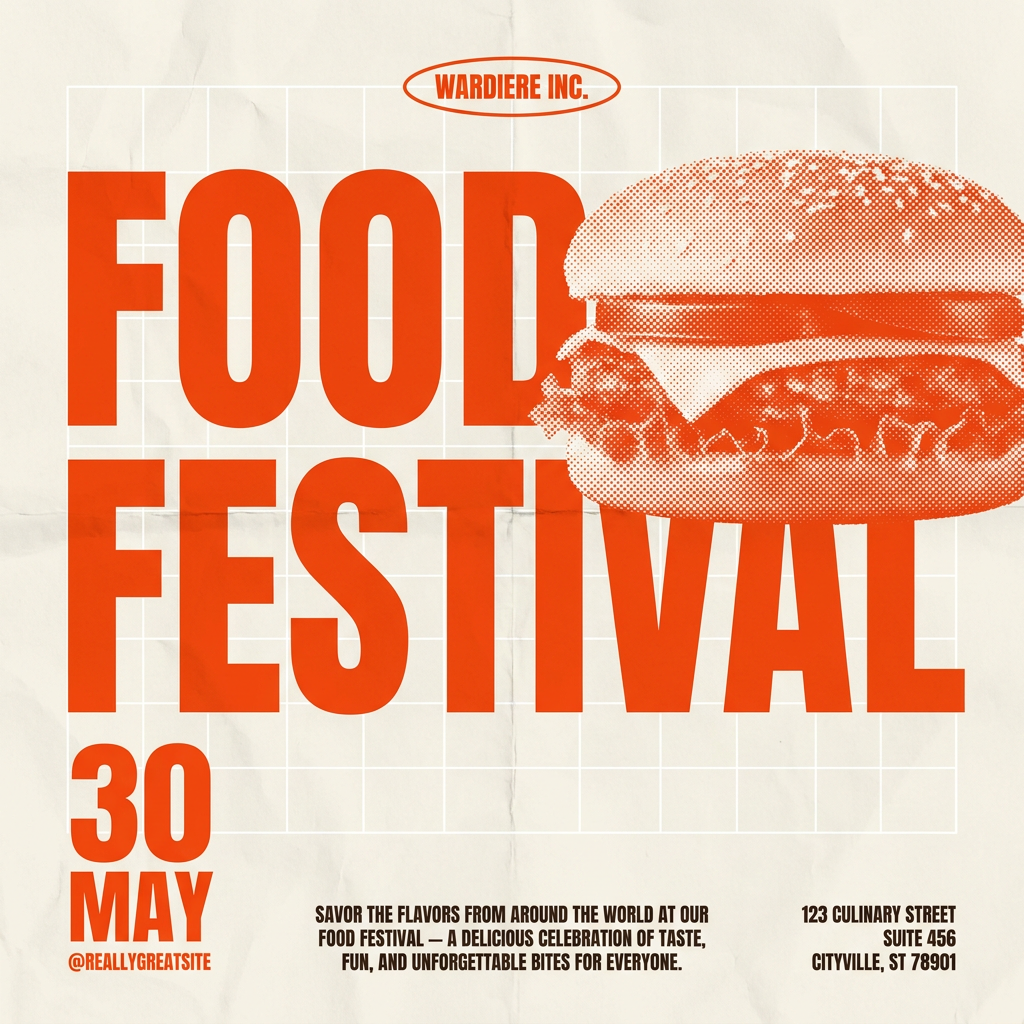
Give your social posts a gritty, analog zine aesthetic. It layers a crumpled paper texture and a subtle grid over a warm cream background to make any event graphic look like a tactile, photocopied flyer. Perfect for DIY gigs and bold promos.
Regenerate using your own assets.
Your next event campaign, generated on-brand in minutes
Stop creating event assets one by one. The modern way to promote an event isn't about grinding through manual design tasks in multiple apps. It's about defining a system once and letting automation handle the execution. By combining a structured brief, a powerful Brandkit, and a multi-output AI workflow on MyUP, you can move from an idea to a complete, on-brand promotional campaign in minutes, not days. Pick a workflow, adapt the brief, and generate your next campaign.